

Selecting the right corrosion-resistant bellows control valves is critical for safe and efficient operations in chemical plants, where aggressive media (such as acids, alkalis, and solvents) can degrade equipment. Here are key considerations:
1. Material Compatibility
The valve body, trim, and bellows must resist the specific chemicals handled. For strong acids (e.g., sulfuric acid), Hastelloy or titanium are ideal due to their resistance to oxidizing environments. For alkalis, 316L stainless steel works well, while PTFE-lined valves suit highly corrosive or high-purity applications. The bellows, a critical seal component, is often made of Inconel or titanium to withstand repeated flexing without corrosion.
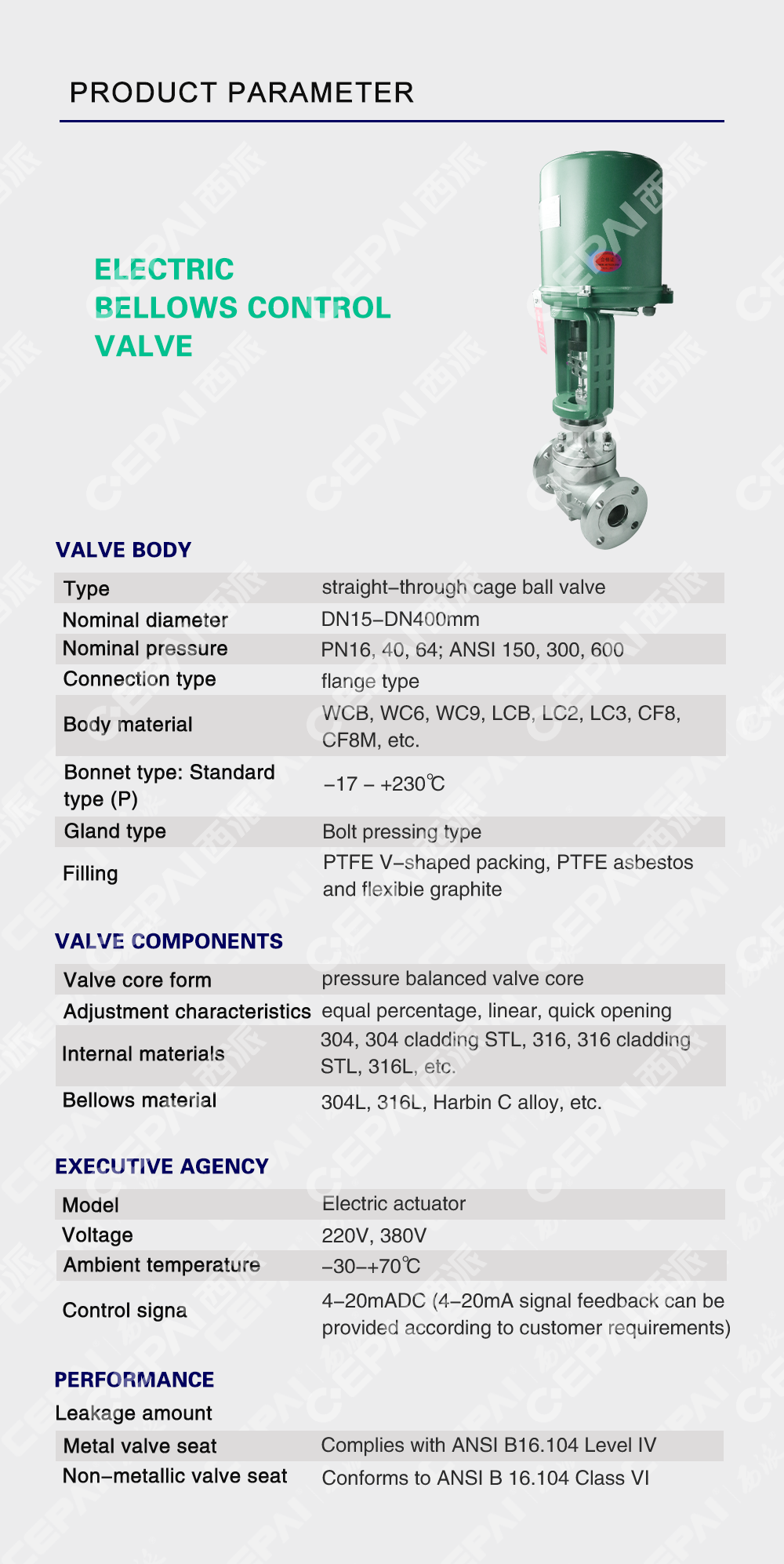
2. Pressure and Temperature Ratings
Ensure the valve handles the process’s pressure (e.g., 150–600 ANSI class) and temperature ranges. Bellows materials like Inconel 625 perform well in high-temperature (up to 800°C) and high-pressure scenarios, while PTFE bellows are limited to lower temperatures (typically <200°C).
3. Bellows Design and Integrity
Opt for bellows with a multi-ply structure to enhance durability and prevent leakage—a single-ply design may fail under frequent cycling. Check for certifications (e.g., ISO 15848) to confirm tight shut-off and long-term reliability, crucial for containing toxic or volatile chemicals.
4. Flow Characteristics and Sizing
Match the valve’s flow coefficient (Cv) to the process’s flow requirements. For precise control in corrosive slurries, choose full-port designs to minimize clogging and erosion.
5. Compliance and Maintenance
Select valves meeting industry standards (e.g., ASME, API) for chemical plant safety. Prioritize models with easy-to-replace bellows and trim to reduce downtime, as corrosion can accelerate wear in harsh environments.
By focusing on material resistance, operational parameters, and design integrity, plant operators can select bellows control valves that ensure longevity and safety in corrosive chemical processes.