

Electric actuated ball valves combine a ball valve’s compact, high-flow design with an electric motor-driven actuator, making them a staple in automated fluid control systems. Here’s what you need to know:
Core Design & Function
- Valve Body: A hollow, rotating ball (with a central port) controls flow—rotating 90° opens/closes the port, while partial rotation modulates flow.
- Electric Actuator: A motor (AC or DC) drives the ball via gears, responding to electrical signals (e.g., 4–20mA, digital commands) for precise positioning. Many include feedback sensors to confirm valve position.
Key Advantages
- Precision Control: Electric actuators offer fine-tuned modulation (vs. purely on/off), ideal for processes needing steady flow rates (e.g., chemical dosing).
- Automation & Remote Operation: Integrate seamlessly with PLCs or SCADA systems, enabling remote monitoring/control—critical for hard-to-reach or hazardous areas.
- Energy Efficiency: No need for compressed air (unlike pneumatic actuators), reducing infrastructure costs.
- Durability: Minimal wear on moving parts; suitable for clean, viscous, or low-abrasive fluids (with proper material selection).
Common Applications
- Water/wastewater treatment (flow regulation).
- HVAC systems (chilled water/steam control).
- Chemical processing (corrosive fluid handling, with stainless steel or PTFE-lined bodies).
- Oil & gas (midstream pipeline isolation).
Key Considerations When Choosing
- Torque Rating: The actuator must generate enough torque to operate the valve, especially for large diameters or high-pressure systems.
- Environmental Protection: IP67/IP68 ratings for wet/dusty environments; explosion-proof certifications (ATEX/IECEx) for hazardous areas.
- Response Time: Electric actuators are slower than pneumatic ones—choose based on process speed needs.
- Material Compatibility: Match body (brass, carbon steel, stainless steel) and seals (EPDM, Viton) to fluid type (corrosive, high-temperature, etc.).
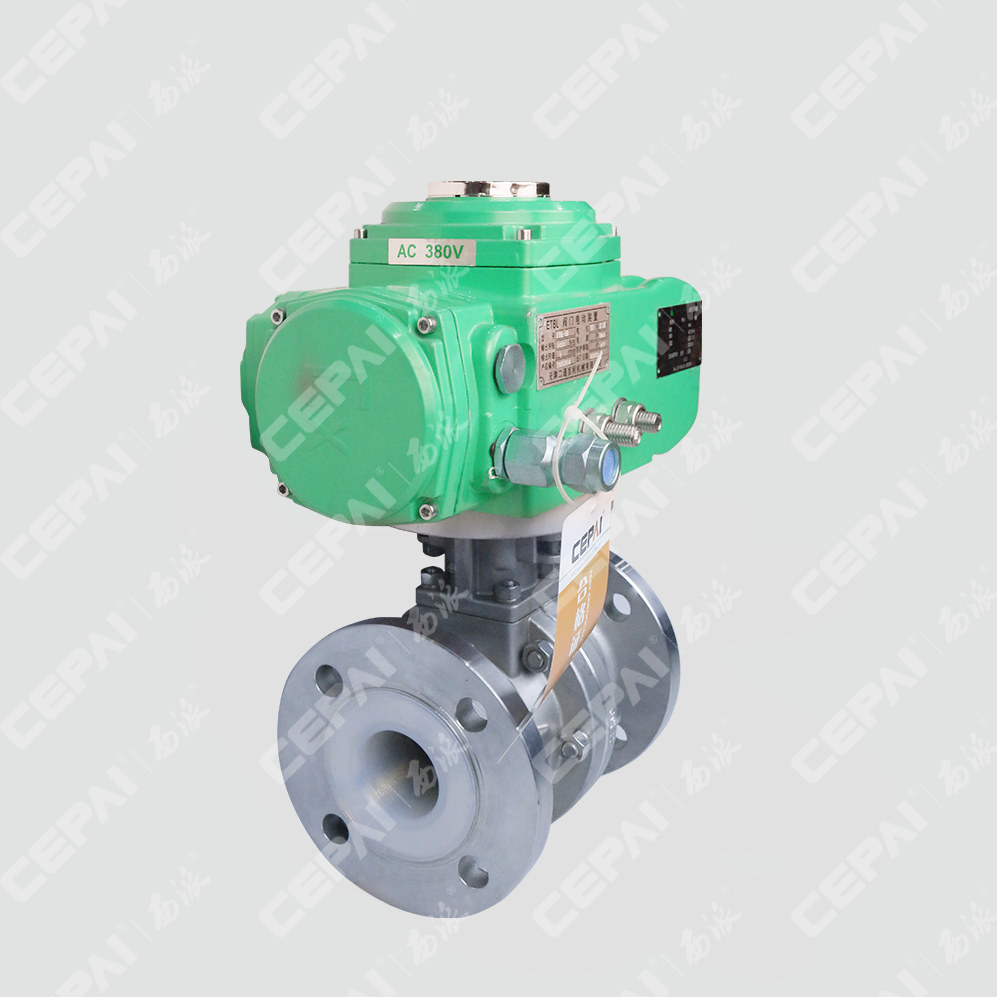
Electric actuated ball valves excel in automated, precision-driven processes, balancing reliability and control. Selecting the right model depends on fluid properties, operational demands, and integration needs.