

1. General Introduction
The Pneumatic O-type Ball Valve is a quarter-turn control valve that uses compressed air (pneumatic power) to actuate an O-shaped ball, enabling precise on-off or flow regulation in pipelines. It combines the sealing reliability of a ball valve with the fast response and energy efficiency of pneumatic actuation.
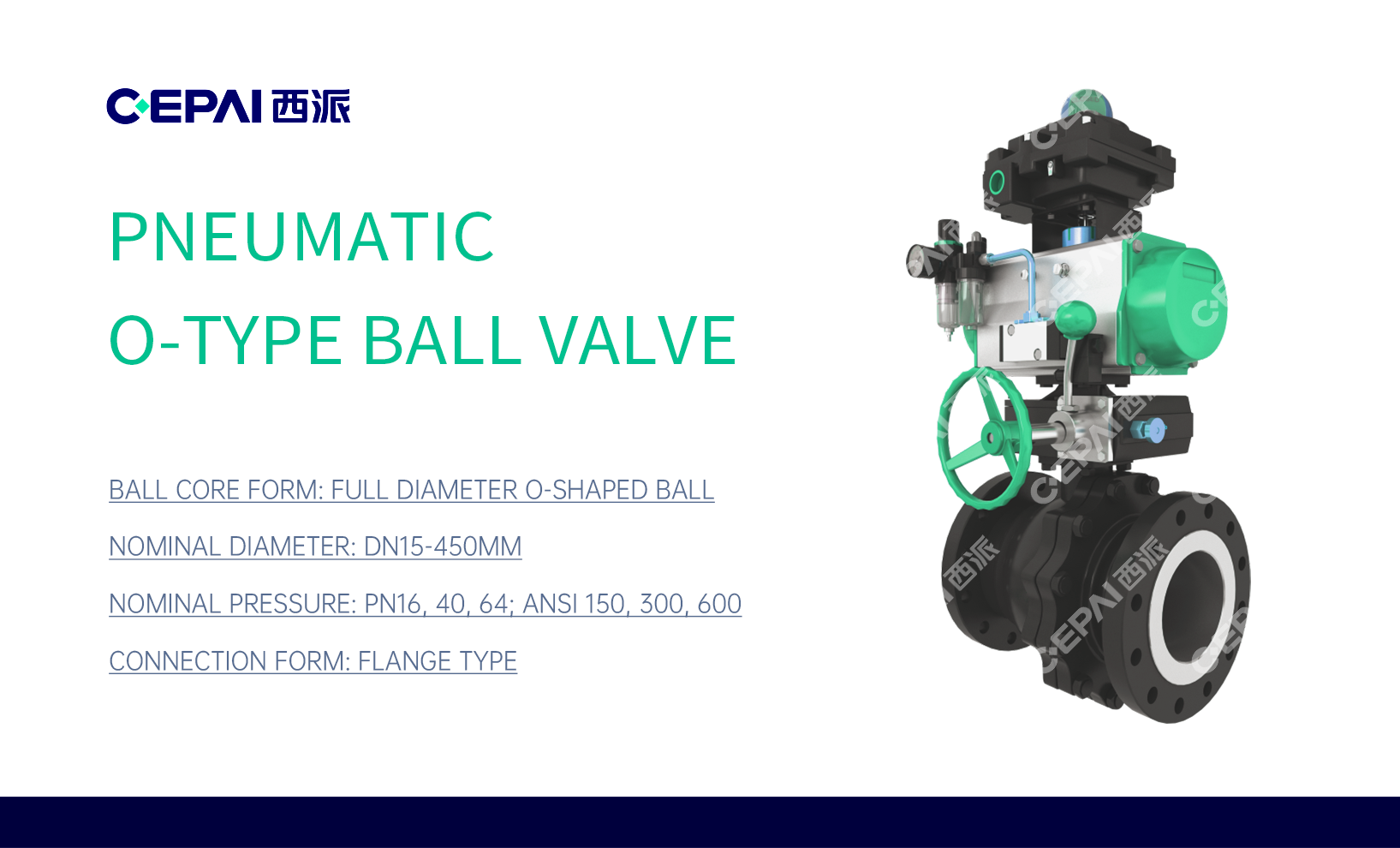
2. Working Principle
- The valve features an O-shaped ball with a circular through-hole and a pneumatic actuator (diaphragm or piston type).
- Open Position: Compressed air pushes the actuator, rotating the ball 90° to align the hole with the pipeline, allowing fluid (liquid/gas) to flow with minimal resistance.
- Closed Position: Air pressure reverses or releases, rotating the ball to block the flow path with the solid part of the ball, ensuring tight shut-off.
3. Design Features
- Pneumatic Actuator:
- Diaphragm actuator: Suitable for low-pressure applications, offering smooth linear motion.
- Piston actuator: Ideal for high-pressure systems, providing higher torque and durability.
- Accessories: Solenoid valves, positioners, and limit switches enable remote control and feedback.
- Ball & Seat:
- O-shaped ball: Made of stainless steel or alloy for corrosion resistance, with a precise circular hole for flow control.
- Seat: Soft materials (PTFE, rubber) for tight sealing or metal seats for high-temperature/high-pressure use.
- Body Material: Cast iron, carbon steel, or stainless steel, chosen based on media compatibility and pressure ratings.
4. Applications
- Industrial Automation: Used in chemical, petrochemical, and food processing plants for automated flow control of corrosive liquids, gases, or slurries.
- Oil & Gas: Controls flow in wellheads, pipelines, and refineries, suitable for harsh environments with explosive or flammable media.
- Water Treatment: Manages water flow in filtration systems, wastewater plants, and irrigation networks.
- HVAC: Regulates refrigerant or water flow in heating/cooling systems for temperature control.
5. Advantages
- Fast Actuation: Pneumatic power enables rapid 90° rotation (typically <1 second), critical for emergency shut-off systems.
- Explosion-Proof Safety: Pneumatic operation is non-electrical, making it safe for hazardous areas with flammable gases.
- Energy Efficiency: Relies on compressed air, reducing electricity consumption compared to electric valves.
- Precise Control: Adjustable air pressure or positioners allow proportional flow regulation in modulating applications.
- Low Maintenance: Simple structure with fewer moving parts, minimizing wear and tear.
In summary, the Pneumatic O-type Ball Valve is a versatile solution for automated fluid control, valued for its safety, speed, and adaptability in industrial and commercial systems.